
I’ve been homeschooling my three children since the beginning of each of their school-aged lives — eight years and counting! (Actually, it’s closer to nine school years, since we began our homeschool journey mid-school year.) And my goodness, have I heard some interesting comments and assumptions about what people think homeschooling is and isn’t.
Some of these ideas are rooted in real experiences shared by homeschooling families, while others couldn’t be farther from the truth. So let’s filter out fact from fiction by dispelling some common homeschooling myths.
Myth #1: Homeschoolers don’t learn how to socialize with other children.
FACT: There are many opportunities for homeschooled children to develop social skills outside the home (since they naturally do so at home, especially with siblings). From co-ops and team sports to classes designed specifically for homeschoolers, there are countless ways for homeschoolers to build friendships and social confidence—just like traditionally schooled children.
Myth #2: Homeschoolers aren’t prepared for the real world.
FACT: In many people’s opinions, including mine, homeschoolers are often more prepared for the real world. Learning happens everywhere and all the time. A simple trip to the grocery store can turn into lessons on cooking and meal prep, money and budgeting, time management, math, agriculture, world cultures, health and nutrition, and community safety. And that’s just scratching the surface.
Learning happens anywhere, anytime.
Myth #3: Homeschoolers are introverted and socially awkward.
FACT: Some homeschoolers are introverted or socially awkward, just like some traditionally schooled children. At the same time, many homeschoolers are extroverted and absolutely thrive in social settings. And let’s be honest: plenty of introverted, socially awkward, and downright “weird” adults were never homeschooled either. (Ahem… me. And being weird is totally okay, by the way!)
Myth #4: Homeschool is not “real school”.
FACT: I’ll admit—I truly can’t stand this one. What do people think we’re doing all day? Playing around? Pretending to do school? As fun as that sounds, I’d much rather be relaxing in a bubble bath with a book than playing schoolhouse.
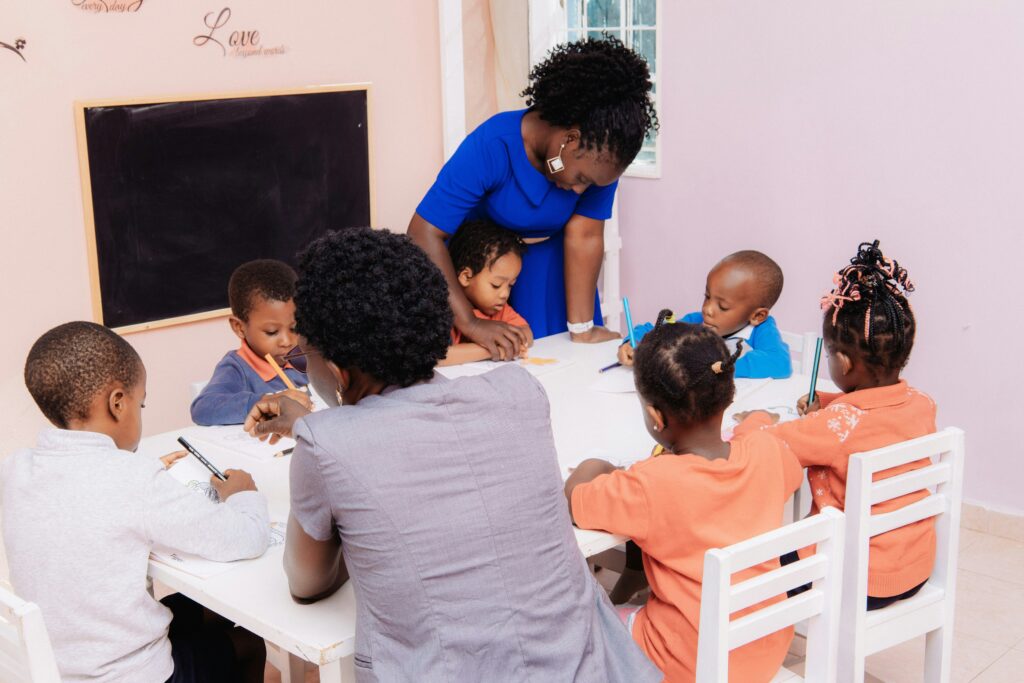
Let’s reframe this: homeschool isn’t traditional school. That part is true. Children aren’t one-size-fits-all, and neither should their education be. Some homeschool families choose to replicate aspects of traditional schooling, while others intentionally design something completely different—and both approaches are valid.
Homeschool is not traditional school.
Myth #5: Homeschooling is very expensive.
FACT: Homeschooling doesn’t have to be expensive. It depends on your budget (and yes, you should absolutely set one), learning style preferences, and curriculum choices. You might spend a dollar on a workbook from the dollar store or invest in a full open-and-go curriculum.
There are also countless free or low-cost resources available, including YouTube, curriculum swaps at local libraries, Facebook groups, and online marketplaces where families sell gently used materials. Homeschooling is adaptable and that flexibility is one of its strengths.
Myth #6: You can’t homeschool without a college degree.
FACT: Parents don’t need a Bachelor’s, Master’s, or Doctorate to homeschool their children. Parents are natural teachers; we do it every day as we prepare our children for adulthood.
That doesn’t mean we need to know everything. For subjects that feel intimidating, families can outsource through tutors, classes, programs, or curriculum support. Open-and-go curricula can be especially helpful on days when “fatigue is fatiguing”.

Myth #7: Homeschooling moms are all housewives who don’t contribute financially.
FACT: Let’s be clear: being a stay-at-home mom is already a full-time, unpaid job. Homeschooling on top of that only adds to the workload.
Homeschooling families come from a wide range of professional and educational backgrounds. Many homeschooling parents run businesses, work remotely, or work part-time outside the home. Within my own circles, homeschool moms include best-selling authors, midwives, doulas, pastors’ wives, childbirth educators, consultants, ESL teachers, artists, nonprofit leaders, counselors, designers, and more. Regardless of whether homeschooling moms share or bear the financial burden for their homes, they are valuable.
Homeschooling moms come from a variety of educational and occupational backgrounds.
Myth #8: Homeschooling isn’t necessary if you pay high taxes for public schools.
FACT: The decision to homeschool is deeply personal and often rooted in necessity. Families consider factors like educational racism and inequality, bullying, insufficient support for neurodivergent needs, lack of resources, and the desire to protect family values.
When all things are considered, families are willing to pay their local tax obligations without hesitation. Oftentimes, many districts allow homeschoolers access to public school resources and extracurriculars, making homeschooling a thoughtful choice, not a rejection of community systems. This leads us to…
Myth #9: Homeschoolers don’t have access to the same curricula as public school students .
FACT: In many districts, homeschooled students can participate in extracurricular activities and even take select classes through public schools and local colleges. Families can often request textbooks used in public schools, though many choose not to. Additionally, many educational programs and apps offer special homeschool pricing.
Myth #10: Homeschoolers don’t participate in extracurricular activities.
FACT: In general, homeschoolers are entitled to participate in their local public school’s team sports and clubs. Additionally, there are many community-wide sports teams and clubs that students of all educational backgrounds participate in together.
Have you heard any other homeschooling myths? My hope is that this list gives you a clearer understanding of what homeschooling is—and what it isn’t—whether you’re considering it for your own family or simply hoping to avoid awkward conversations with the homeschooling families you know.
You May Also Like