My AuDHD Masking Story and What I’m Learning About Identity
Part of the Performing… Series within The Pieces of Me Series—reflections from my AuDHD journal.
I’m still learning, unlearning, and putting language to my experiences in real time. What I share here reflects what I understand right now—not a final or complete picture.
I thought I was just being responsible. Polished. Social. Adaptable. Growing up.
I didn’t know I was masking. Here’s a piece of my story.
The first time I heard the word masking was during one of my many deep dives researching ADHD and autism.
When I came across the term, of course, my brain immediately thought of the 90’s movie The Mask—Jim Carrey, the green face, “Cuban Pete.”
Ooh, somebody, stop me!
Hilarious! But what I was reading? Not funny at all. More like jaw-to-the-floor.
As I read through the list of ADHD and autism masking signs, I found myself mentally checking box after box, relating to all the things.
It felt like I had stumbled onto another chapter in this unfolding story of my life, like more puzzle pieces quietly locking into place.
Reading the list of masking signs wasn’t even remotely funny. More like jaw-to-the-floor.
What Masking Looked Like (Even When I Didn’t Know It)
For most of my life, I didn’t have language for any of this.
I just thought I was adaptable, observant, and trying to do the “right” thing—being who I needed to be in the moment.
But looking back, masking looked like:
- appearing very organized (especially with tasks and information)
- hiding stims or forcing myself to sit still and be quiet
- being a “social butterfly” when I needed to be
- engaging in small talk, even when it felt unnatural and draining
- being labeled high-achieving, gifted, and smart
- practicing smiles in the mirror, and then overly smiling, to seem more approachable
- making eye contact to appear respectful and attentive
- keeping up with trends—even when they were uncomfortable and nonsensible—in both adolescence and adulthood
(Why was I wearing multiple multi-colored undershirts like that or aspiring to make homemade bread everyday?? 😩)
It also looked like becoming whoever the moment required—doing the research, learning the language, and adjusting my behavior so it appeared like I already “was about that life.”

Masking Started Earlier Than I Realized
If I’m being honest, masking didn’t start in adulthood.
It started in childhood.
There were plenty of times I wanted to just jump, spin around, make goofy faces, and make silly sounds—but I would stop myself with all my tiny might so that I could fit in and keep up a particular persona that my mother was grooming me to have: Little Miss Perfect.
I was told to “stand straight, chin up, shoulders back, stomach in,” even though it felt so unnatural and uncomfortable.
I wanted to have a little fun and be an awkward little kid. But if I made a silly face, I was told to stop before my face “got stuck that way.” (Insert eye roll here.)
I would stim by biting the inside of my cheeks, but because it made me look like I was making a face, I was told to stop—not because it could hurt me, but because of how it looked.
Same thing with biting my fingernails. Don’t do that… because “that doesn’t look good.”
So instead, I adjusted. No, my stims didn’t disappear.
They just went quiet.
Hidden.
Private.
Camouflaged.
I turned to things I could do unnoticed, mostly while in the sanctuary of my bedroom and bathroom:
- skin and hair picking
- flicking my fingernails
- tapping my fingers together
- clicking my tongue to the beats in my head
(Music has always been a special interest of mine—still is.)
Sometimes it looked like listening to the same part of a song over and over again, just to scratch an sensory-centered itch I didn’t yet have language for.
I learned early on that if I did certain things, I’d be corrected.
So I adjusted.
It became my job to play the role of a quiet, obedient, intelligent, and respectful girl—and as an overachiever and rule follower by nature, I did a really good job.
My stims didn’t disappear. They just went quiet. Camouflaged.
As I got older, it became more complicated.
By middle school, I naturally gravitated toward things that didn’t quite fit the mold for a girl. I liked sports (beyond the surface, like stats and the behind-the-scenes parts), baggier clothing, and darker colors. I traded my dolls for rollerblading and the X-Games. Anything pink and girlie made me want to barf.
Now, while I was able to find comfort in the company of a couple of friends who also went against the grain, the majority of my peers were definitely playing the role of the “girly girl.” It was so hard to fit in and feel accepted.
So I tried. I mirrored what I saw in the popular and confident girls—the hairstyles, the accessories, the clothing—as much as I could tolerate.
Still felt like a weirdo, though.

* * *
As I got older, that same pattern followed me into adulthood.
Fast forward to adulthood, I just naturally found myself relating more to what the fellas were doing, so I had a lot of male friends and “play brothers”. Guys were always just simpler, drama-free, more straightforward, and easier to read—with the exception of a few unicorns.
It took way too much energy to keep up with the girls. (I did make room for a couple of female friends along the way, but not too many to burn out.)
Of course, my plans would often go awry when a male friend would become interested in me, unbeknownst to me at first. (So clueless. And that’s a whole other convo.)
Bro, why you gotta mess things up?
* * *
Still today, I find myself gravitating to the barbershop, figuratively. Beauty shop talk was foreign to me, and even annoying, as it was filled with the latest gossip around the block and around the entertainment industry.
I just couldn’t relate—but I did a great job acting like it!
Even in church spaces, like in our small groups, I always remember feeling the pull to be in conversations that felt more natural to me. The men would be downstairs talking sports, debating, going back and forth—and, ooh, did I want to jump in!
But there were these unspoken rules. The women separated from the men and gathered in the living room or the kitchen. And the conversations? Let’s just say… I tried.
Heart talk, British TV shows I hadn’t seen, sewing, recipes… Girl, I wanted to go in the basement with the fellas and talk football and basketball!
But I forced myself to assimilate for the sake of what I thought was being a good Christian woman. (Mind you, this was early on in my walk with Christ, so I had a lot to learn and unlearn).
I didn’t want to be talked about—and I had already experienced what that felt like.
“Who does she think she is?”
“She must think she’s better than us.”
“She ain’t cute.”
“Does she like him? That’s my man!” (Even though the guy is totally disinterested in her. Talk about delusional.)
Yup.
Been there.
Done that.
So, you can imagine my desire to stay far away from such drama, so much so that I was willing to sit and talk about a good Instant Pot recipe (which I needed anyway)…
Even if it didn’t feel like me.
* * *
But now?
Now I don’t care as much.
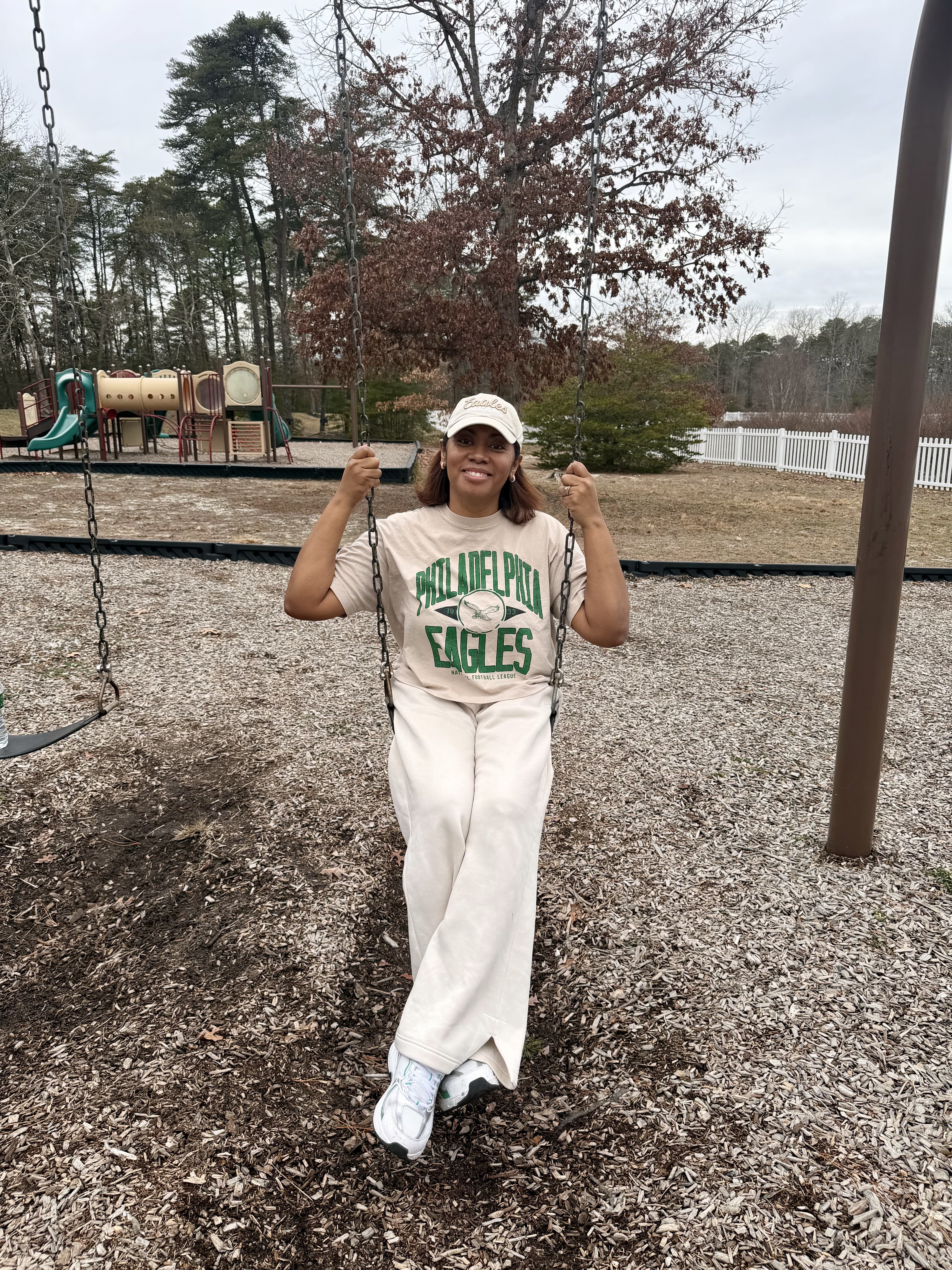
I’ll unapologetically excuse myself and go where the conversation feels natural. If that’s football talk, I’m there—not to impress anyone or take anyone’s man—but because it’s my special interest.
And honestly?
I’d rather be a fly on the wall listening to people passionately debate their teams and favorite players than force myself into conversations that drain me.
Masking in My Adult Life
Masking followed me into adulthood in ways that looked productive. Successful, even.
Presentations. Workshops. Advocacy. Speaking engagements. Social events.
On the outside, I could appear put together, calm, and confident.
But internally?
That was a different story.
Put together on the outside. Internally… a whole different story.
Before events, I needed time to mentally prepare. There were internal pep talks, rehearsing conversations, mapping out what I would say, researching venues and parking, and even planning how I would enter (late) or leave a space (early).
Externally, I looked calm and capable.
Internally, I was anxious, overthinking, mentally fidgeting, and replaying conversations long after they ended—what I later learned is called rumination.
My body was still.
My mind was doing the absolute most.
The Cost of Masking
There were things I noticed over time but didn’t fully understand.
Like needing long breaks after social interactions. Not being able to handle back-to-back events. If I pushed through anyway, I would need days—or even months—to recover.
And instead of asking why…
I blamed perimenopause. I blamed my busyness. I blamed myself.
Why am I so tired?
Why don’t I want to go?
Why can’t I just keep up?
A Deeper Layer of Masking
Sometimes, masking showed up in even deeper ways—like the roles I thought I had to play in relationships and womanhood.
The “good wife.”
The desirable woman.
The super mom.
The one who had it all together.
Yeah, that part.
The performing.
The expectations.
The confusion.
Whew.
That’s a whole story in itself—and one I’ll share soon.

Where I Am Now
Now, I see it differently.
Masking isn’t something I’m trying to completely eliminate overnight. In some spaces, it still feels necessary.
But in others…I’m starting to let it go.
What That Looks Like for Me
Unmasking looks like:
- wearing headphones or earplugs without shame
- using adult fidgets
- choosing to stay home when needed
- taking time to do nothing
- letting myself be excited about what I love
- talking about my special interests freely
- wearing what feels good, even if I’ve worn it two days in a row
- being playful
- being affectionate
- allowing my face to just… be my face
I have a better (and growing) understanding of what “staying in your own lane” and “walking to the beat of your own drum” truly means.
Unmasking also, for me, looks like being aware of unhealthy relationships, compromising situations, and when I’m being taken advantage of—and avoiding, removing myself, and setting boundaries.
I’m still figuring things out, so this is only the beginning.
I’m learning where the mask belongs… and where it doesn’t.
What I see now is that masking didn’t just show up in big, obvious ways.
It showed up in the smallest adjustments and compromises.
The quiet corrections.
The subtle shifts.
The constant awareness of how I was being perceived.
Over time, those small moments added up.
And what I thought was just “growing up”…
…was actually me learning how to survive.
If this resonates with you, you can read more about how this has shown up in my life here: Performing Womanhood.
You May Also Like